Wednesday, March 14, 2018

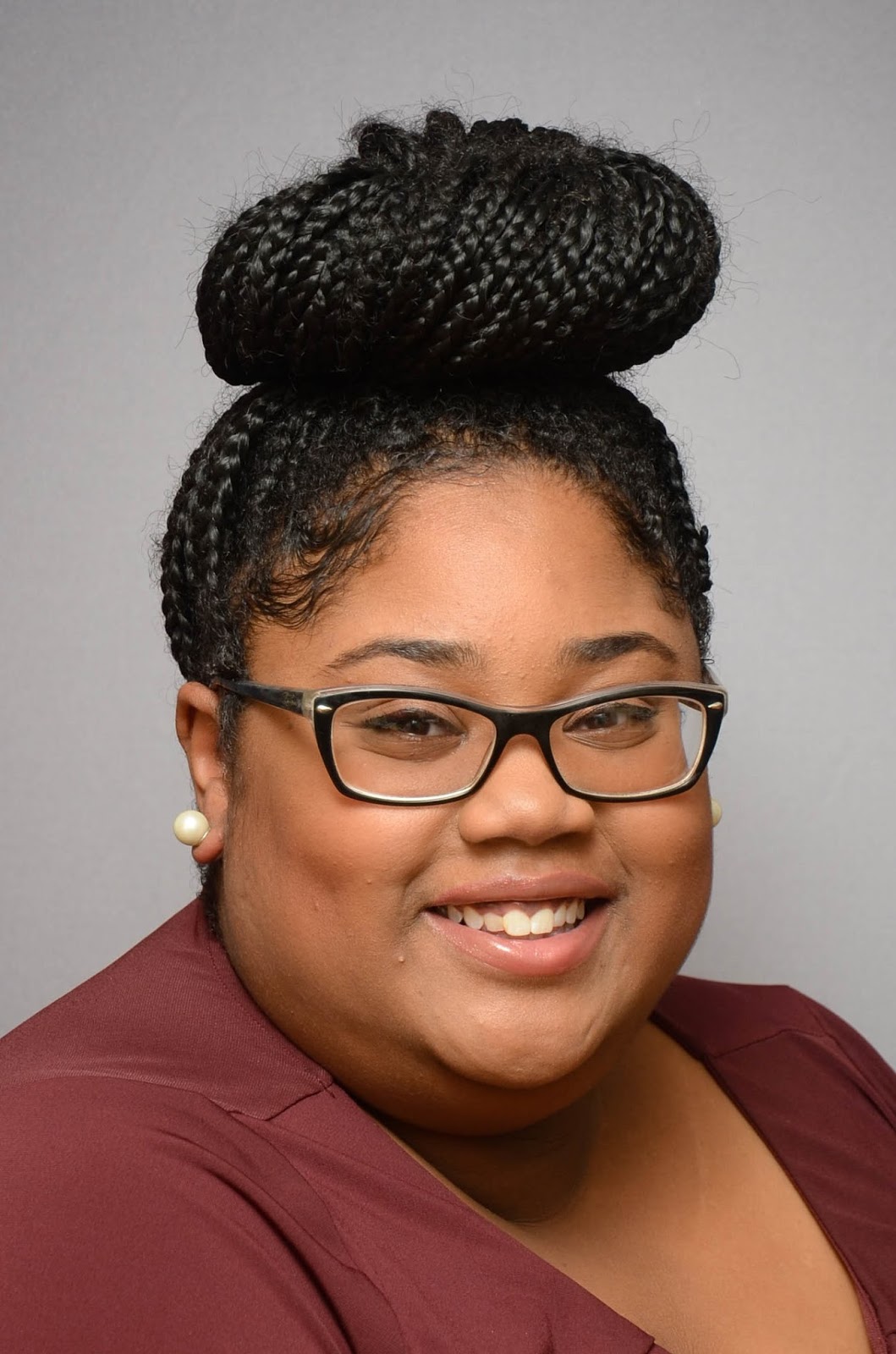
This month’s featured alumni is Emily Chippa, a December 2017 graduate who majored in Psychology. Emily came as a transfer student from Schoolcraft College.

Although your graduation was recent, what’s some/one of your best memories or experiences as a CASL student?

Emily Chippa: I enjoyed Dr. Hymes’ Social Psychology lab and and my internship with Dr. Loeb (a Psychology professor) because this helped me to receive a position with Career Services on campus. 

What courses did you take and how were they beneficial in the classroom and beyond? 

EC: I took a lot of courses that made me self aware which is helpful in an office setting where you’re trying to understand people and help people grow and you want to fine tune general procedures and policies to each individual. So, courses like Gender Roles, Psychology, Sociology, Personality Theory; these try to help you understand how people work.

In your opinion, what makes CASL student’s unique and how has that affected you? 

EC: CASL students have a strong sense of teamwork which is good because companies like that. Within the Talent Gateway and Career Services, it is meant to make people more aware of their soft skills. This is also why I decided to do an internship because it took me outside of my comfort zone. [Working in Career Services helped me] realize I absolutely love this office and working with students.

Why did you choose to major in the Liberal Arts field? 

EC: I have an intrinsic want and need to help people. I love to see people grow and succeed and achieve things they want out of life. I don’t think there’s another career that allows you to do that besides Liberal Arts. I decided on psychology during my junior year of high school. At that time there was someone who was struggling with mental illness and I wanted to be able to understand more and help others that were suffering with the same thing as the person I was close to was struggling with. Being an advocate for that type of change has furthered my drive to want to be in the psychology field. Also, human beings are so unpredictable. In Psychology and Sociology, we can understand how humans act and how we think. These fields are vital to our society and our success as human beings.

Additional thoughts to share or advice? 

EC: I’m proud I was able to push myself outside my comfort zone and I was able to succeed in what I wanted to do. It took me over five years to get my B.A. and I worked part-time and took full time classes. But I want to let other students know it’s ok to take a little while. Don’t compare yourself to other students. School is hard and you will only survive if you really really want to.

Interview Compiled by Leah Olajide 

Monday, February 26, 2018

CASL Alum: Non-Traditional Grad, Degree Worth the Effort

Recent CASL Graduate Vunisha Lawson shares what earning her Bachelor's Degree as a non-traditional student means to her... 

Year of Graduation and Major: 2017/Behavioral Sciences

What did you enjoy most about your time as a CASL student? Out of all the great memories I’ve
had as a CASL student, my most enjoyable time was during my internship. I learned so many
things that can be applied to my professional, as well as, my personal life. It was also a time for
me to get out of my comfort zone, be more vocal, and take chances.

What event/experiences made your college career unique? My college experience has been
shaped by the fact that I am a nontraditional student, and I’m the first in my immediate family to
earn a college degree. It was definitely a challenge with work, attending classes, and completing
assignments. Earning a Bachelor’s degree has been a goal of mine for quite some time now.
With a little prioritizing, and a strong desire to work in a career field where I can help people like
myself to pursue their aspirations, I was able to do just that.

What advice would you give to CASL freshman? Get involved in student organizations and other
events on campus. They are great way to meet new people, and network. Also, do as many
internships as possible. You will not only gain more experience, but you’ll also get a feel for
what career is best for you.

Why do you value a liberal arts education? The thing I value most about a liberal arts education
is that the courses are so broad. My particular degree required that I take several classes in
Psychology, Sociology, and Anthropology. I had the opportunity to tailor my courses to one
specific career. However, liberal arts programs give you an opportunity to gain a considerable
amount of knowledge and experience that can be applied to several careers.

Interview Compiled by Leah Olajide

Wednesday, December 13, 2017

Over the years, many University of Michigan-Dearborn students have turned their tassel and officially been welcomed to the Michigan Alumni Family. However, while many become alums in title, there are those who choose to make the title work for them as they give back to their alma mater.


In this month’s alumni blog post, we meet Theresa Sommerville, a 2016 CASL graduate who studied Psychology and Women's and Gender Studies and minored in Communication. She works as a supervisor at a Social Services Agency, and remains connected with the University by serving as the Chair for the African American Alumni Affiliate.

CASL: Why do you value the education you received as a CASL student?
Theresa Sommerville: Being a CASL student was the best decision for me. In a world where STEM is taking over, Liberal Arts degrees are often forgotten or not sought after. Being in CASL, I learned valuable skills in writing, reading, communication, project management, organization and critical thinking. These are skills that everyone needs, regardless of your degree path. I also learned business strategies, analytical statistics, and other key skills that others forget can be learned with a CASL degree.

CASL: Why do you believe the liberal arts and humanities are valuable?
TS: Liberal arts and humanities are valuable because we are growing into a more social world. Top executives in STEM have to meet with people just like the top business professional. We learn valuable skills in the liberal arts and humanities that easily become a part of our everyday work and social lives. That's what liberal arts and humanities gives us -- the tools to make it happen in the social workplace.


Interview Compiled by Leah Olajide 

Thursday, August 31, 2017

In this interview, CASL Grad Jessica Strachan discusses how her liberal arts degree has shaped her academically and professionally by Leah Johnson


-What year did you graduate and what was your major?

J.S.: 2009 B.A. I majored in communications-journalism and behavioral sciences. I earned my M.A. from UM-Flint in social sciences in 2011. 

-What Clubs/Organizations were you part of while on campus? 
J.S.: President of Amnesty International, a writer for the Michigan Journal, member of Campus Video. I also worked in Admissions & Orientation, was an orientation leader and later worked in Institutional Advancement, developing the framework for the campus' Student Philanthropy Council. 

-Describe the current project you're currently working on and how it relates to campus and the Dearborn Community
J.S.: Right now I have the pleasure of covering the people and projects contributing positive things to the city of Dearborn, a community I feel very connected to from my undergrad experience at UM-Dearborn. I'm the project editor and engagement manager for Metromode Media's On the Ground Dearborn program, where we are embedded in the community for three months to promote the initiatives and leaders driving vitality within the city.

-How has a liberal arts degree from CASL helped you personally and professionally? 

J.S.: One of the most valuable experiences from my liberal arts degree was the school's emphasis on gaining professional experience as a student through internships. As a new writer, I was ahead of the game with a full portfolio of published work at local news stations thanks to the opportunities I had from CASL's internship program. I'm passionate about the arts and social sciences and in each piece I write, I'm able to pull from my interdisciplinary education at UM-Dearborn. 

Tuesday, June 20, 2017

The Youngest (potential) CASL Students

Two future Wolverines decided to skip attending a Headstart program and advance straight to college at the University of Michigan-Dearborn.

In early June, my niece Malaya, and my good friend Veronica’s niece, Ryleigh, met for the first time on UM-D’s campus. Veronica (Ronnie) and I had been arranging the perfect time for our almost-one-month-apart nieces (Malaya was born May 19, 2016 and Ryleigh was born June 22, 2016) to meet. Campus was the perfect setting. Our nieces enjoyed meeting professionals in the administration building, me and Veronica’s academic advisor- Traci Ballard, and had lunch in the bustling University Center during a large Welcome Event in progress for new students.

Another highlight was taking Malaya and Ryleigh to CASL and letting them sit in the lecture hall where Veronica and I had our Journalism classes and Psychology classes.  
Of course, these young minds had no idea they were on a college campus, or meeting major stakeholders on campus, or that they were being groomed to follow in their auntie’s footsteps. I will share those things with Malaya later, and I’m sure Ronnie will do the same with Ryleigh.

What is important is that we exposed them to opportunity and the importance of learning, even at a young age. Opportunity and being a Lifelong Learner is what UM-D represents for myself and I can confidently say it represents the same for Ronnie too.

Alumni typically keep in mind college memories, and are encouraged to give back to their alma mater. However, part of giving back includes investing in future generations, especially your own family members.

In due time, Malaya and Ryleigh will grow up and realize they are two beautiful African American women. Perhaps they won’t have to contend with various social, or racial issues that are present now. Maybe they will or won’t be interested in the stories Ronnie and I can share from our days as students at Michigan. Whatever the case, Veronica and I have given them a foundation, and maybe years from now our nieces will agree that blue is the best color to bleed.

Written By Leah T. Johnson

Leah and Veronica are CASL ’11 graduates with degrees in Communication.


Sunday, May 7, 2017

How did CASL prepare a Journalism and Screen Studies student for a diverse career? Meet alum Matthew A. Laurinec, a 2013 (JASS) graduate) with a Public Relations Certificate. He also coaches Lacrosse for UM-Dearborn. By Leah Johnson

Being a CASL Student afforded you what opportunities?

Matthew Laurinec: As a CASL student you have the opportunity to take a variety of different internships. The entire program works together to place you based on your major, and you can get experience in a lot of different fields. The resources such as the Writing Center, and other labs in CASL really helped too. After graduation, I came to appreciate just the connection to the different professors that I dealt with on such a personal level (that’s really credit to UM-Dearborn as a whole, not just CASL). It just seemed like they [the CASL professors] were always more available. Some of my favorites were Professor Schaefer (Investigative Reporting), Professor Kiska (Intro and Advanced Journalism), Professor Gilmore (Video Production/Screen Studies), Professor Ward (Speech).

How did CASL prepare you for your current career?

ML: I’m currently the Producer of the Blaine Fowler Morning Show 96.3 WDVD out of the Fisher Building in Detroit since the fall of 2013. I started with an internship there. I’d already graduated and I found this internship on my own. What’s great is my degree really went a long way. The fact that I had a degree in multiple fields made it something that was a lot more desirable to them. The UM degree carried a lot of weight in the decision process to bring me on. I got a part time job while interning and then the producer position opened up. Now I’m fulltime and I’m on with them every morning. My degree has given me a lot of different aspects of knowing different parts of the job. For example, I’ve used my PR certificate for dealing with certain press releases. If articles need to be written I can use my journalism experience to write it. The wide range of skills I learned from my degree have helped me be valuable to the company.

Did you always know that you wanted to major in journalism?

ML: I didn’t always know. I thought I was going to do teaching. I had a good relationship with my high school English teacher. But I got into the love of journalism as my love of Michigan football got me into the press box and on the field. That’s what turned me onto the idea of being a sports writer. I got involved with the Michigan Journal on campus writing sports. Then I was the Sports Editor, then the Editor in Chief and then the Managing Editor. So, as I was moving along the way with that I found a love for writing.

Do you have any regrets about selecting a liberal arts field of study?  

ML: No. I have no regrets about choosing this degree. My degree has opened many doors that even if I decide to leave the radio station I could anywhere and have my degree be valued.
At first I thought I would not have a job, but I think that I was prepared that I knew what I had done and that I had earned a Michigan degree and that eventually it all worked out.

What advice would u give to current CASL Students who may be undecided if they want to remain in the Liberal Arts field?

ML: I think in Liberal Arts you have a vast career path. My focus was print journalism. But after college, I got into another side of journalism. I thought I was going to write for a newspaper or sports team. The classes you take in CASL are crossover classes and you’re forced to be put into situations that will help you in your career. The degree you’re earning is more valuable than the major you get it in. It’s got a lot more weight to it.
Try a lot of different things when you first get to CASL. Also, don’t be afraid to work for free at first. Many people think as soon as they graduate they need a job paying six figures or else they’ve failed. My friends may be ahead of me financially. But some of them are also doing things they hate. I genuinely love going to work because I promised myself I would not work a 9-5 schedule in a cubicle, but some people get so set on that. Go do what you want and pursue it and I guarantee you’ll be a lot happier.  


Saturday, April 1, 2017

Liberal Arts Encourages Community Consciousness

Charday Ward

The following one-on-one interview delves into the meaning and value of the Liberal Arts field of study.

After being homeschooled from 1st-12th grade, Charday Ward graduated from CASL in 2010 having majored in English and minored in African and African American Studies. She currently works as a Community Developer in Detroit, and is convinced her liberal arts back ground has widened her world, personally, and professionally.

Charday shares her story below…

What did you enjoy most about your CASL student experience?

Charday: I enjoyed my African and African American Studies (AAAS) classes and all the perks that came along with being in that program. The Souls of Success retreat was one of the highlights of my college career. Also, meeting campus guests like legendary jazz artist Ken Cox, poet and activist Sonia Sanchez, international theater director Aku Kadogo, and renowned jazz percussionist Jerry LeDuff had a major impact on my life. These were my professors' personal friends and they brought them to our campus to enrich our college experience and inspire us to be world changers and creators. 


How has your liberal arts degree helped determine your career choice/path? 

Charday: My liberal arts degree shaped my career choice/path by making me an extremely well-rounded person who can do so many things in so many different fields. Shortly after graduating from UM-D, I went into education and now I work as a Community Developer in Detroit. I hope to one day serve in a political office and I know with a background in liberal arts I have the knowledge and experiences to effectively serve my community as a legislator. 

How has your liberal arts degree shaped you as a person? 

Charday: My liberal arts degree and the material studied in my programs inspired me to become a community minded individual and to do whatever was in my power to positively influence people in my community. It shaped my perspective of the world around me and made me a great teacher of English, African-American History and Writing, and also prepared to me effectively work in the Detroit community as a Youth Coordinator for a community development corporation. Studying liberal arts also awakened the creative side of me, and exposed me to literature and humanities that inspired me to become an emerging playwright and poet.  

Do you think people misunderstand the value of a liberal arts degree? And if so, how do you help to adjust their understanding?

Charday: Yes, I think people misunderstand the value of a liberal arts degree. Sometimes a liberal arts degree is mistakenly considered "easy" or "unfocused." However, I feel that it made me well-rounded, taught me the ways of the world, and prepared me for work in the service field. I always advocate for a liberal arts education, especially when I am advising young people. I encourage them to study literature, history, communications and writing because it will help them to be successful in almost any career. 

Did you do anything exciting to celebrate Women’s History Month?

Charday: Yes!  I had the opportunity to conduct a workshop with some young ladies at Alternatives for Girls.  We had a very invigorating discussion about women's equality and what needs to be done to solve some of the inequities that women face in America. It was an extremely inspiring conversation and it moved me to continue the discourse in other spaces like it. 


Interview conducted by Leah T. Johnson, CASL 2011