Sunday, May 7, 2017

How did CASL prepare a Journalism and Screen Studies student for a diverse career? Meet alum Matthew A. Laurinec, a 2013 (JASS) graduate) with a Public Relations Certificate. He also coaches Lacrosse for UM-Dearborn. By Leah Johnson

Being a CASL Student afforded you what opportunities?

Matthew Laurinec: As a CASL student you have the opportunity to take a variety of different internships. The entire program works together to place you based on your major, and you can get experience in a lot of different fields. The resources such as the Writing Center, and other labs in CASL really helped too. After graduation, I came to appreciate just the connection to the different professors that I dealt with on such a personal level (that’s really credit to UM-Dearborn as a whole, not just CASL). It just seemed like they [the CASL professors] were always more available. Some of my favorites were Professor Schaefer (Investigative Reporting), Professor Kiska (Intro and Advanced Journalism), Professor Gilmore (Video Production/Screen Studies), Professor Ward (Speech).

How did CASL prepare you for your current career?

ML: I’m currently the Producer of the Blaine Fowler Morning Show 96.3 WDVD out of the Fisher Building in Detroit since the fall of 2013. I started with an internship there. I’d already graduated and I found this internship on my own. What’s great is my degree really went a long way. The fact that I had a degree in multiple fields made it something that was a lot more desirable to them. The UM degree carried a lot of weight in the decision process to bring me on. I got a part time job while interning and then the producer position opened up. Now I’m fulltime and I’m on with them every morning. My degree has given me a lot of different aspects of knowing different parts of the job. For example, I’ve used my PR certificate for dealing with certain press releases. If articles need to be written I can use my journalism experience to write it. The wide range of skills I learned from my degree have helped me be valuable to the company.

Did you always know that you wanted to major in journalism?

ML: I didn’t always know. I thought I was going to do teaching. I had a good relationship with my high school English teacher. But I got into the love of journalism as my love of Michigan football got me into the press box and on the field. That’s what turned me onto the idea of being a sports writer. I got involved with the Michigan Journal on campus writing sports. Then I was the Sports Editor, then the Editor in Chief and then the Managing Editor. So, as I was moving along the way with that I found a love for writing.

Do you have any regrets about selecting a liberal arts field of study?  

ML: No. I have no regrets about choosing this degree. My degree has opened many doors that even if I decide to leave the radio station I could anywhere and have my degree be valued.
At first I thought I would not have a job, but I think that I was prepared that I knew what I had done and that I had earned a Michigan degree and that eventually it all worked out.

What advice would u give to current CASL Students who may be undecided if they want to remain in the Liberal Arts field?

ML: I think in Liberal Arts you have a vast career path. My focus was print journalism. But after college, I got into another side of journalism. I thought I was going to write for a newspaper or sports team. The classes you take in CASL are crossover classes and you’re forced to be put into situations that will help you in your career. The degree you’re earning is more valuable than the major you get it in. It’s got a lot more weight to it.
Try a lot of different things when you first get to CASL. Also, don’t be afraid to work for free at first. Many people think as soon as they graduate they need a job paying six figures or else they’ve failed. My friends may be ahead of me financially. But some of them are also doing things they hate. I genuinely love going to work because I promised myself I would not work a 9-5 schedule in a cubicle, but some people get so set on that. Go do what you want and pursue it and I guarantee you’ll be a lot happier.  


Saturday, April 1, 2017

Liberal Arts Encourages Community Consciousness

Charday Ward

The following one-on-one interview delves into the meaning and value of the Liberal Arts field of study.

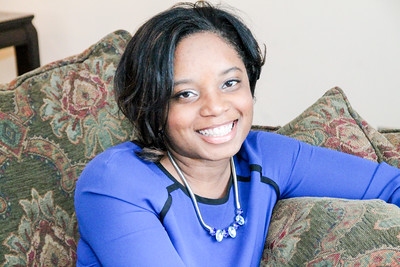
After being homeschooled from 1st-12th grade, Charday Ward graduated from CASL in 2010 having majored in English and minored in African and African American Studies. She currently works as a Community Developer in Detroit, and is convinced her liberal arts back ground has widened her world, personally, and professionally.

Charday shares her story below…

What did you enjoy most about your CASL student experience?

Charday: I enjoyed my African and African American Studies (AAAS) classes and all the perks that came along with being in that program. The Souls of Success retreat was one of the highlights of my college career. Also, meeting campus guests like legendary jazz artist Ken Cox, poet and activist Sonia Sanchez, international theater director Aku Kadogo, and renowned jazz percussionist Jerry LeDuff had a major impact on my life. These were my professors' personal friends and they brought them to our campus to enrich our college experience and inspire us to be world changers and creators. 


How has your liberal arts degree helped determine your career choice/path? 

Charday: My liberal arts degree shaped my career choice/path by making me an extremely well-rounded person who can do so many things in so many different fields. Shortly after graduating from UM-D, I went into education and now I work as a Community Developer in Detroit. I hope to one day serve in a political office and I know with a background in liberal arts I have the knowledge and experiences to effectively serve my community as a legislator. 

How has your liberal arts degree shaped you as a person? 

Charday: My liberal arts degree and the material studied in my programs inspired me to become a community minded individual and to do whatever was in my power to positively influence people in my community. It shaped my perspective of the world around me and made me a great teacher of English, African-American History and Writing, and also prepared to me effectively work in the Detroit community as a Youth Coordinator for a community development corporation. Studying liberal arts also awakened the creative side of me, and exposed me to literature and humanities that inspired me to become an emerging playwright and poet.  

Do you think people misunderstand the value of a liberal arts degree? And if so, how do you help to adjust their understanding?

Charday: Yes, I think people misunderstand the value of a liberal arts degree. Sometimes a liberal arts degree is mistakenly considered "easy" or "unfocused." However, I feel that it made me well-rounded, taught me the ways of the world, and prepared me for work in the service field. I always advocate for a liberal arts education, especially when I am advising young people. I encourage them to study literature, history, communications and writing because it will help them to be successful in almost any career. 

Did you do anything exciting to celebrate Women’s History Month?

Charday: Yes!  I had the opportunity to conduct a workshop with some young ladies at Alternatives for Girls.  We had a very invigorating discussion about women's equality and what needs to be done to solve some of the inequities that women face in America. It was an extremely inspiring conversation and it moved me to continue the discourse in other spaces like it. 


Interview conducted by Leah T. Johnson, CASL 2011 

Thursday, February 23, 2017

A Personal Reflection on Black History Month

“If a race has no history, if it has no worthwhile tradition, it becomes a negligible factor in the thought of the world, and it stands in danger of being exterminated.” Dr. Carter G. Woodson

This is the second year in a row where I have sat back, put my feet up (figuratively speaking) and waited for a Black History Month moment to come to me (literally speaking).

It’s true I go through my annual rituals of selecting my Black History Month readings, I talk to my family and others about some of my favorite African American historical icons, and I either visit or reminisce about the insightful and educational times I had at the Charles H. Wright Museum of African American history.

This year was no exception. However, I recently confessed to my dad that I don’t feel very “Black History Month-ish” this time around. I was shocked to hear that he felt the same.
We spent time trying to determine the answer to the burning question ‘why?’ ‘Why do we feel this way?’ Is it because of the political climate of the country that makes it challenging to want to celebrate achievements of Black Americans since an African American family no longer occupies the White House?  Could it be because the leader of the free world speaks of a certain black, male abolitionist and historical figure in the present tense, and as a Detroit Free Press columnist wrote that “we can only laugh when a young white boy grows up to be president in 2017 and thinks he can invite Frederick Douglass to the White House for Dinner?” And in addition, the White House press secretary believes that the “contributions of Frederick Douglass will become more and more.” Is it because of the tired complaint of many African Americans that February is the shortest month of the year, and therefore doesn’t give us much time to plan events/activities to celebrate? Is it because my dad and I are just being lazy this year?

We never answered the ‘why,’ and I’m happy we didn’t dwell on finding the answer because if we had done so, we may not have discovered what steps we can take to change these un-celebratory feelings.

Interestingly, my dad said, “if we forget to celebrate this year and let this year pass by, then it’ll be easy to do it next year and the year after, until soon, we won’t see the need to recognize this month anymore.”

That statement worried me. No way can this happen. Not to me. I’m the same girl who worked at the Charles H. Wright Museum writing stories and educating many of various ages and backgrounds about the African American experience. I’m the same girl who looked forward to the Black Student Union events on campus during February. I’m the same girl who made it mandatory to print a Black History Month series in the campus newspaper. I’m the same girl who discussed the Negro National Anthem, the Renaissance time period, and many other African American topics with fellow students. I’m the same girl who believes, as does my dad, that Black History is American history.

Although I’m that same girl and I did all these things, February 2017 forced me to realize that I need to do more. I’ve realized what made Black History Month so special to me the past few years is that it’s not passive, it’s active.

As the month comes to a close, I’m more alert to ways to become more active; perhaps it’s writing or reading an article, creating a Black History Curriculum to be taught in the community  stretching beyond the month of February, or attending special events.

I can no longer expect Black History month to be a feeling. It is a month of purposeful action that can and should easily translate into daily living. Leah Johnson ltaishaj@att.net 


Saturday, January 7, 2017

Unprepared For a Vital Lesson


Black History Month and Women’s History Month came early this year. It was completely unexpected. I was ill-prepared, and launched into space via the new film Hidden FiguresThis movie gave me an early present in the form of a history lesson I didn’t know I needed, as I watched the story of three African American women who worked for NASA. at the Langley campus in Virginia and helped launch America into space. 

Admittedly, I’d become a little irritated with films about Africans/African Americans Hollywood has created and pushed into mainstream for the past few years. Of course, it’s great for the seasoned black actors and the rising stars. But I wondered ‘how many times does the story of the fight for civil rights need to be told? How many ways does it need to be presented in film to prove that black history is American history? Is all this hoopla surrounding black films really necessary?' Enough is enough already.  

In addition to those feelings, I’m still frightened of the movie Apollo 13- a movie I saw when I was way too young. I remember my heart pounding through the entire film as it was too suspenseful for my nerves. I’d since turned a cold shoulder to movies about outer space. 

Hidden Figures, however, removed my growing dismay toward black films, and I settled comfortably into the film’s setting at NASA. This movie is about much more than astronauts and rocket ships. It’s about education. Hidden Figures makes being educated extremely appealing. It makes having a brilliant mind- and not being afraid to use it- attractive. 

In a selfie-obsessed world where young people run to take the perfect picture in the bathroom mirror, Hidden Figures shows the opposite. For those women running (sometimes literally) to the Colored bathrooms at NASA to relieve themselves also meant putting brains over boys, and it was their brains that made them truly beautiful. Even in bathroom stalls they calculated numbers, looked beyond the obvious math problems, and vied for positions and pay they knew they deserved. These women were the first of their kind as Mathematicians, Engineers, Supervisors, and Influencers on the operations and success of NASA. The film gives just enough details about their personal lives, including their husbands who loved them and were attracted to their wit, perseverance, and intelligence. 

Considering that my alma mater unveiled its upgraded Science Building last year, it was perfect timing that the University offered pre-screening passes to Hidden Figures, and a special program highlighting the S.T.E.M. field. I brought my dad as my date, and I felt a sense of pride, and a deeper respect for education after seeing the movie. Having degrees and letters associated with one’s name is only for prestigious purposes. Rather, the goal is to never stop learning (which is something my dad has taught me) and to be unapologetically smart like Dorothy Vaughn, Mary Jackson, and Katherine Johnson, whose names are no longer hidden. Leah Johnson ltaishaj@att.net


Monday, December 12, 2016

On Turning Mistakes into Opportunities

The Greenbean Casserole. Not just any ole Greenbean Casserole, but THE Greenbean Casserole. Definite article required. La pièce de résistance of the Thanksgiving Table. (Fancy,huh? I learned French back in the 1980s at UM-D from Halina Loukopoulous Minadéo, Dr. Crapo, Madame Shea et al) THE Thanksgiving Greenbean Casserole was my only assignment. And I messed it up. “I don’t need a measuring cup.” Confident in my over-confidence, I eyeballed a cup of milk using the 10 ounce Cream of Mushroom Soup can. Yes. I eyeballed it. Just like my UM-D Calculus Prof would eyeball derivatives. Yep. I eyeballed a cup of milk: One and a half 10 ounce Cream of Mushroom Soup Cans of milk. YesireeBob. Wait. What? “That looks runny, add more Green Beans.” Said Mom. “…and more onions.” “Here’s another can of Cream of Mushroom Soup. DO NOT add any milk.” “Here’s a bigger casserole dish.” “What did you do?” Overcompensating for my psyche’s rising Defensive Whine, I mustered up a snarky “I read the directions.” My science training from UM-D and beyond required an explanation. So did my Mom, but she was willing to let it go as she looked askance at me and took a restorative sip of her Cook’s Drink. “16 ounces in a cup, right?” I said, seeking maternal approval. My mother sighed a sigh that mentally thumped me upside the head. “No, 8.” How could I be so stupid? 16 ounces in a cup?!? So I back-peddled with“Well I was trained in the Metric System.” Which precipitated another maternal sigh. “Simple things confound the complex mind.” That one deserved a real thump. We started laughing. Mom just said “Now we’ll have twice as much.” Although she was gracious about it on the outside, she slid me a look that said “dumbbell”. I just know it. She’ll never admit it though. My mistake of doubling the recipe became an opportunity. You see, we had a guest at our table who had never had the typical Thanksgiving feast of turkey and all the accoutrements. His favorite? The Greenbean Casserole. Guess who joyfully got all the leftovers? Yeah, we doubled it on purpose. ` Alison Tasich (Class of 87) Alison Tasich received her BS in Microbiology from UM-Dearborn in 1987. She went on to earn an MA in French at Wayne State University and a MAT in Biology, Chemistry, and French from Wayne State University. She now works as a Biology, Chemistry, and French teacher for the Crestwood School District in Dearborn Heights.

Tuesday, September 27, 2016

Falling for Fall

Falling for Fall It's as if my body knows it's the Fall of the year. I naturally begin to crave a slower pace of life, and familiar routines that begin in September. While I am five years removed from my alma mater, the University that's known for giving graduates the "Degree that Makes a Difference," I crave the college life. Well, not the exams and writing papers part. But, it's as if I secretly envy students who get to press the "re-start" button, or "new start" button as they begin or continue their college journey. Which is why I always seem to find my way back to campus during the beginning of the Fall term. Recently I returned to campus to sit on what feels like my 1 millionth panel as an alum, and I can honestly say that sharing my story and experiences never gets old and it's never a burden (even when it means coming on a Friday-yes, Friday- evening). I view it as an opportunity to give back and connect with those that will soon join me as part of the Maize and Blue alumni family. The weekend was the only thing that separated my visit to campus again as I returned on a Monday afternoon for a meeting. I'm laughing to myself as I think about how I became one of the "Strollers" on campus that Monday afternoon. When I was a student, I could tell who were students too. We had a certain look on our face and in our eyes that we maintained as we walked to class. We had a certain strut or stride in our walk. We definitely didn't stroll across campus because we knew we had somewhere we needed to be. Well, as I mentioned, I became a Stroller. But, I couldn't help it! I strolled though the College of Arts, Sciences, and Letters; after all, that building was where I took majority of my classes. That college is synonymous with my college education. That college (which has the acronym CASL, pronounced like castle) is where my parents would pick me up from when I first started as a student and they would say "How fitting that our Princess is taking classes in CASL." Princess, Castle/CASL, get it? I digress. CASL was also where I taught for a Summer program about three years after I graduated. I could go on and on about the memories. While in CASL, I found myself looking at the offered courses, new and old. I looked at the names of the professors, some I knew, some I didn't know, some who taught me. I couldn't help but notice that some Professor's names were missing, in particular Dr. Rahman, who passed last September, and taught many of the African and African American Studies courses. The lack of his presence on the campus still lingers, and I doubt it will ever dissipate. The stroll around CASL reminded me of the struggles to pass my math course, and my triumphs in my composition, communication, and psychology courses. It was also in CASL that I declared African and African American Studies as my 2nd minor. It has since become a Major on campus. But most importantly, my stroll reminded me of tranquility. That somehow no matter how chaotic things became during my college years, my first years as an alum, or even things in my personal life, I've always weathered the storm. Surprisingly, Fall is not my favorite season, primarily because it signifies the end of Summer. Instead, Fall (especially Fall at my alma mater) signifies new beginnings and it does its job reminding me to slow down, be tranquil, and prevail despite all odds. Regards, Leah Johnson | ltaishaj@att.net

Tuesday, June 7, 2016

Why was UM-Dearborn important to me?

Why was UM-Dearborn important to me? My happy memories of campus are many and varied, from hanging out at the ROC on a Friday night, to wandering the Fairlane Estate to clear my mind, to standing in line in the COB to fill out paper registration forms, to the occasional fancy lunch in the Pool, to some shenanigans in the CAB I’m wiser not to share. If I had to point to the campus characteristic that mattered the most, though, it would be the opportunity for independent intellectual growth.

I came to campus intending to major in chemistry with an ambition to ultimately pursue a Ph.D. Second semester general chemistry with Dr. Potts solidified that goal. He was an entertaining, engaging, and challenging teacher, and by the end of the semester I decided I had to do research with him. I still remember fondly the first meeting in his office, in the spring of 1983. Dr. Potts welcomed me into his laboratory, explained the problem in gold chemistry he was trying to tackle, and gave me the freedom to choose my own directions to solve it. There were many, many stumbles along the way, but Dr. Potts was always patient, encouraging, willing to allow me to try new things, and generous with his time in teaching me new techniques. He introduced me to the literature and to the professional scientific community of chemistry. He taught me how to blow glass (and let me learn the hard way the difference between hot and cool glass). Along with a couple of my classmates, he led me to Chicago in the spring of 1986 for my first American Chemical Society national meeting, an overwhelming and thrilling experience. Hard to believe that 30 years hence, those semi-annual meetings remain a fixture of my professional life.

While Dr. Potts is the singular figure in my Dearborn experience, he is by no means the only one to help my journey of growth. As my laboratory skills improved (slowly), I managed to secure a job doing preparative work for the general chemistry laboratories, and that on-campus job both brought some much needed income and an excuse to spend even more time around the labs. Linda Grimm and Bob Quattro ran those laboratories like a top and were great bosses and mentors. My other chemistry professors---Otto, Donahue, Decamp, Bazzi, Tai, …---drilled all aspects of chemistry into me and prepared me well for the rigors of graduate study. Among my many other professors, I have to single out Prof. Brown (Math) and Prof. Prentis (Physics), whose elegant presentation of difficult topics continue to inspire both my own research and my teaching style. And of course I cannot fail to mention the many, many UM-Dearborn friends who made the days and the nights so much fun.

After receiving my Ph.D. from Ohio State in 1991, I returned to the Dearborn area for a position in the Ford Research Laboratory. I soon came to miss the academic life, and in a display of shockingly poor judgment, the Natural Sciences department welcomed me back to teach General Chemistry in the evenings. Imagine my excitement to be back to my old stomping grounds, but on the other side of the desk! I soon discovered the joy of working with students, hearing their stories, helping them learn and grow, and watching them master new material. During the day I worked with a world-class group of Ford scientists and engineers, building my research portfolio, and in the evenings I honed my teaching skills. That combination of experiences put me in the position to return to the academy full-time in 2004. Years at Ford made this chemist look like a chemical engineer, and now I teach and do research at the boundary of of two in my faculty position at the University of Notre Dame.

I have had many good breaks and great mentors along the way. But the people and the environment at UM-Dearborn gave me the solid foundation to build on.

Written by: William Schneider